The Long Road to Nordkapp is a motorcycle expedition covering more than 5,000 miles across eight countries. But distance alone has never been the reason for making the journey.
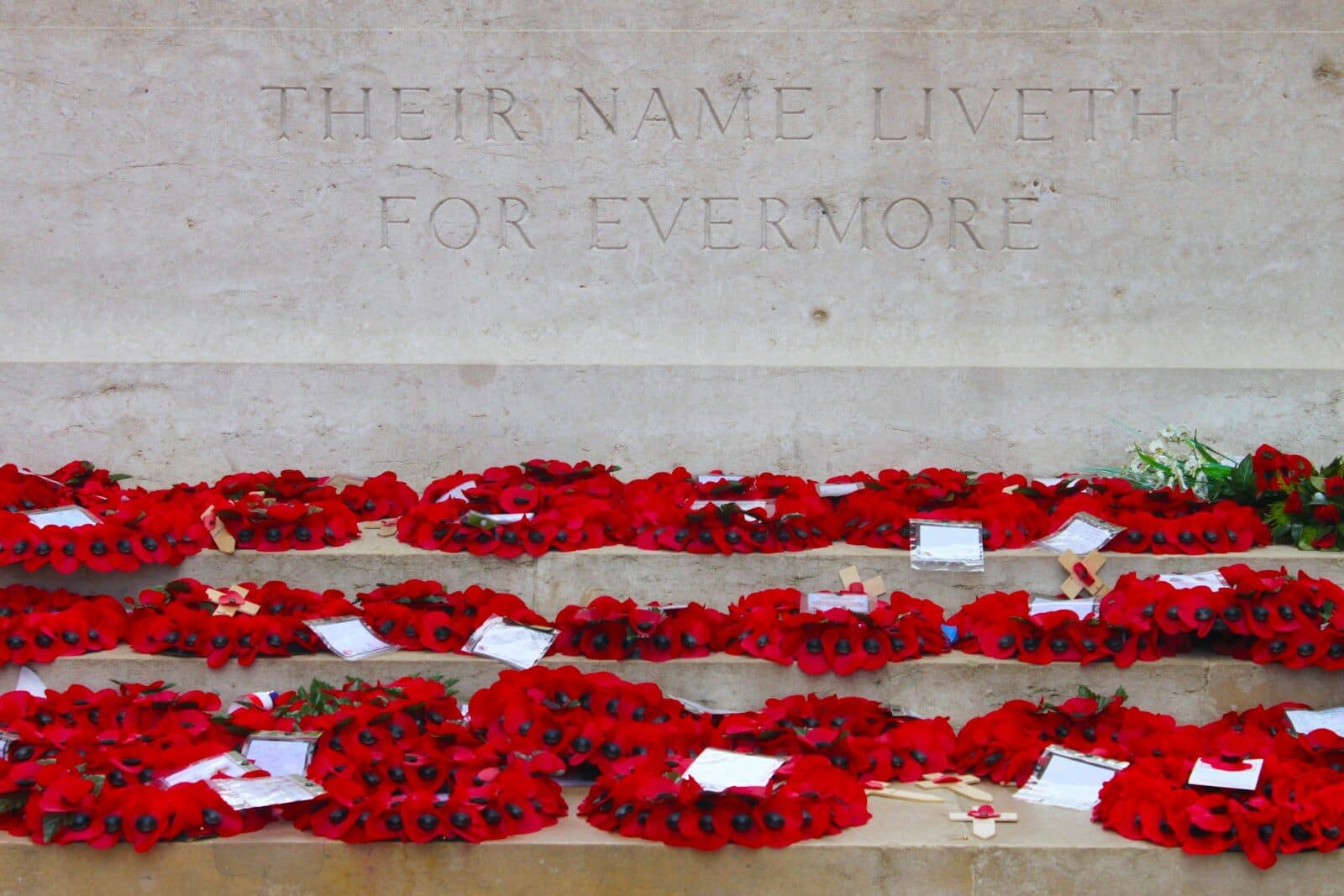
Along the route from Plymouth to Nordkapp and back, I will stop at a series of war memorials and Commonwealth war cemeteries. Some commemorate major battles familiar to almost everyone. Others contain relatively small groups of Commonwealth graves far from home. Each one commemorates people whose lives war interrupted or ended.
As a Royal Air Force veteran, remembrance is an important part of this expedition. I do not want to simply ride through the countries where previous generations of British and Allied servicemen fought and died without acknowledging them.
At each location I will stop the motorcycle, take time away from the journey and pay my respects. I will also leave a small remembrance token as a personal mark of respect from The Long Road to Nordkapp.
Day 0: Plymouth Naval Memorial
The journey begins at Plymouth Naval Memorial.
There could be few more appropriate places to start. The memorial overlooks Plymouth Sound and commemorates thousands of sailors of the Royal Navy who died during the First and Second World Wars and who have no known grave but the sea.
Before I turn the motorcycle towards Nordkapp, I will remember those whose names are recorded here.
It establishes what I want remembrance to mean throughout this expedition. Before the miles, photographs and adventure begin, there will be a moment to remember those who never came home.
Day 2: Allies Memorial, Dunkirk
The first overseas remembrance stop will be the Allies Memorial at Dunkirk.
Dunkirk occupies a unique place in British wartime history. The evacuation of Allied troops during Operation Dynamo in 1940 has become synonymous with determination, sacrifice and the extraordinary efforts of both military personnel and civilians.
Standing there will also provide an important connection between the expedition’s departure from Britain and the battlefields of mainland Europe.
Day 3: Arnhem Oosterbeek War Cemetery
From Dunkirk, the route continues towards the Netherlands and Arnhem Oosterbeek War Cemetery.
Arnhem will forever be associated with Operation Market Garden, when Allied forces attempted to secure the bridges across the Netherlands in September 1944. The fighting around Arnhem and Oosterbeek was particularly fierce, and the cemetery contains the graves of many of those who died during the operation.
This will undoubtedly be one of the most significant remembrance stops of the entire journey.
Day 3: Hamburg Commonwealth War Cemetery, Ohlsdorf
Later on Day 3, I will visit the Commonwealth war graves within Hamburg Cemetery at Ohlsdorf.
The cemetery contains Commonwealth casualties from both world wars and provides another reminder of the geographical scale of the conflicts.
For me, these visits are not about glorifying war or celebrating victory. They are about individuals. Behind every headstone is a person, a family and a life that did not continue as it should have.
Day 4: Kiel War Cemetery
Before boarding the ferry from Kiel to Oslo, I will visit Kiel’s Nordfriedhof.
Kiel was one of Germany’s most important naval centres, making the city strategically significant during both world wars. Visiting a cemetery here before leaving Germany and crossing into Norway creates another link between the wartime history of northern Europe and the route of the expedition.
I will spend the remainder of Day 4 aboard the ferry to Oslo, making this my final remembrance stop before reaching Scandinavia.
Day 5: Oslo, Vestre Gravlund
Once in Norway, the next stop will be Vestre Gravlund in Oslo.
The cemetery contains Commonwealth war graves and provides an opportunity to remember Allied personnel who died in Norway and the surrounding region.
Norway’s experience during the Second World War will become increasingly relevant as I travel north, particularly as the route approaches Narvik and the locations associated with the fighting of 1940.
Day 7: Trondheim Stavne Cemetery
During the planned non-riding day in Trondheim, I will visit Trondheim Stavne Cemetery.
The cemetery contains Commonwealth war graves from the Second World War. Having a non-riding day provides the opportunity to visit without the pressure of needing to cover hundreds of miles afterwards.
It will be a day to stop, reflect and remember before continuing north.
Day 9: Bodø Cemetery
Further north, I will visit Bodø Cemetery.
The Commonwealth graves here remind us that British and Allied servicemen lost their lives far beyond the battlefields of France, Belgium and the Netherlands that we more commonly associate with remembrance.
By this point in the expedition, I will be well inside the Arctic Circle, thousands of miles from Plymouth, yet still encountering the graves of servicemen who once made their own journeys north.
Day 10: Håkvik Cemetery
Day 10 will contain several particularly important remembrance locations around Narvik, beginning with Håkvik Cemetery.
The graves and memorials in this region commemorate those who fought and died during the Battle of Narvik and the Norwegian Campaign of 1940.
The landscape may now be peaceful, but its history tells a very different story.
Day 10: Narvik New Cemetery
I will also visit Narvik New Cemetery to pay my respects to the Commonwealth servicemen who died during the Norwegian Campaign and are buried there.
The Battles of Narvik involved British, Norwegian, French, Polish and German forces and included significant naval and land engagements.
For a British veteran travelling through northern Norway, Narvik is somewhere I believe deserves more than simply riding past.
Day 10: Battle of Narvik 1940 Memorial, Øse
The third remembrance stop associated with Narvik will be the Battle of Narvik 1940 Memorial at Øse.
Together, Håkvik, Narvik and Øse will make Day 10 one of the most significant remembrance days of The Long Road to Nordkapp.
These locations will provide an opportunity not simply to read about the Norwegian Campaign, but to stand in the landscape where these events took place and remember the people involved.
Day 19: Royal Air Force Memorial, Fredericia
The return journey south eventually brings me to Denmark and a memorial with particular personal significance: the Royal Air Force Monument at Fredericia.
As a Royal Air Force veteran, this will inevitably be one of the most personal stops of the expedition.
The memorial commemorates Allied airmen and the contribution made by the Royal Air Force during the Second World War. I will stop here to pay my respects, not simply as a traveller passing through Denmark, but as someone privileged to have worn the same uniform.
Day 19: Bispebjerg Cemetery, Copenhagen
The journey then continues to Bispebjerg Cemetery in Copenhagen, where Commonwealth war graves provide another opportunity for remembrance before leaving Scandinavia.
By this stage I will have travelled from the south coast of England to the very north of Europe and begun the long journey home.
The headstones here will reinforce something that I expect to encounter repeatedly throughout the expedition: the extraordinary geographical reach of the sacrifices made during the Second World War.
Day 20: Waal Crossing Memorial
Back in the Netherlands, I will visit the Waal Crossing Memorial.
The crossing of the River Waal at Nijmegen during Operation Market Garden was undertaken by American troops of the 82nd Airborne Division under extremely heavy fire.
Although The Long Road to Nordkapp has a strong British and Commonwealth remembrance focus, remembrance should never be restricted by nationality. British, American, Canadian, Polish, Norwegian, French and other Allied servicemen fought alongside one another during the liberation of Europe.
Their sacrifice deserves to be remembered together.
Day 20: Reichswald Forest War Cemetery
One of the final major remembrance stops will be Reichswald Forest War Cemetery in Germany.
Reichswald is the largest Commonwealth war cemetery in Germany and contains thousands of Commonwealth burials from the Second World War.
After visiting smaller cemeteries and individual memorials throughout Scandinavia, the scale of Reichswald will provide a very different perspective.
Thousands of headstones standing together make the human cost of war impossible to reduce to statistics.
More Than Points on a Route
These places are not being added to the expedition simply because they happen to be close to the road.
They are part of the reason for travelling it.
At every cemetery and memorial, the engine will be switched off and the journey will stop for a while. There will be no rush to collect a photograph and move on to the next destination.
I want to read the names. I want to see the ages. I want to understand something about the people being remembered and the events that brought them to that particular place.
Where appropriate, I will leave a small remembrance token as a mark of respect.
The Long Road to Nordkapp will pass through some of the most spectacular landscapes in Europe. There will be mountains, fjords, Arctic roads, long days in the saddle and eventually the North Cape itself.
But among those thousands of miles will also be quiet moments beside headstones and memorials.
From Plymouth to Dunkirk, Arnhem to Hamburg, Oslo to Trondheim, Bodø to Narvik, Denmark and eventually back through the Netherlands and Germany, I will remember those who travelled these roads before me under circumstances very different from my own.
I have the privilege of riding through Europe freely.
Part of this journey is about remembering those who helped make that possible.
We will remember them.
Leave a Reply